Say David Lynch and cinema arrives immediately: a red curtain, a road at night, a face that suddenly becomes unfamiliar. Yet a decisive part of that world existed before the films, on sheets of paper, canvases, photographs and notebooks.
In the dossier published for its fortieth anniversary, Fondation Cartier returned to The Air Is on Fire, the 2007 exhibition staged by Lynch himself. It brought together paintings, photographs and a vast number of drawings, sketches and notes made between 1960 and 2006. Some had been carefully preserved since his adolescence. For European audiences, it was a chance to see more than a filmmaker with another pastime. It revealed a visual artist whose obsessions had entered the studio long before they reached a camera.
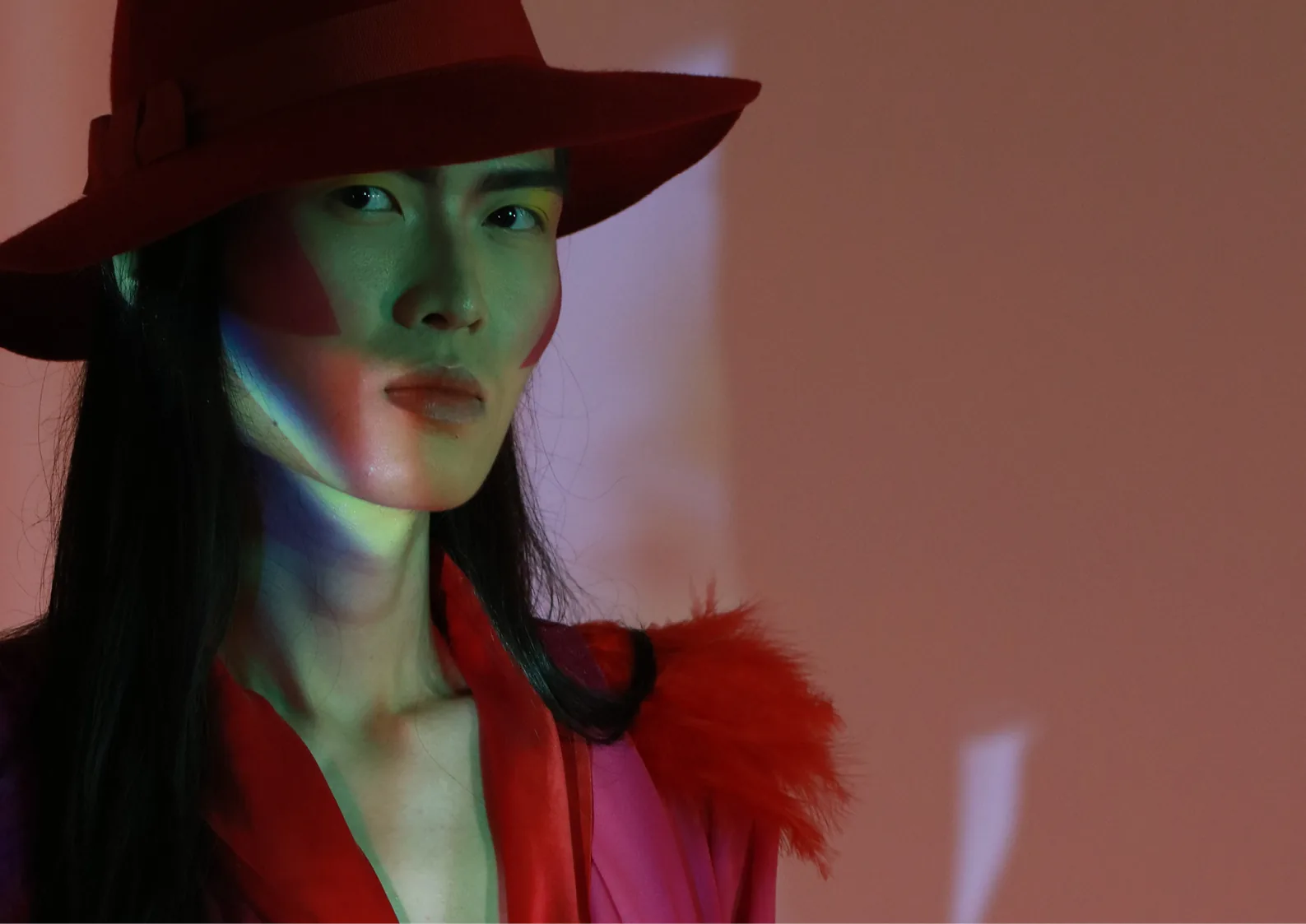
This reversal interests me. In my fashion films and in photographic works such as Liquid Sky, I do not begin with a script that the image must obey. I begin with an atmosphere, a body placed in a space, a light that makes something familiar and then spoils it. The story appears while the work is being made; it does not always come first.
I am not claiming that my images are “Lynchian,” a word now applied to almost any dark room containing a lamp. The point is more exact. Cinema, painting and photography can emerge from the same mental store without respecting disciplinary borders. A drawn figure can already contain a sound; a photograph can imply duration; a stain on canvas can be the beginning of a scene.
Fondation Cartier writes that these works revealed the beginnings and transformations of Lynch’s obsessions. That formulation matters. An archive does more than reconstruct what an artist has done. Sometimes it shows that a future work was already present, in an unstable form, years before it found the medium it needed.
This is also why I keep painting, photography, video and writing close together. I am not interested in deciding which language is final. I am interested in the passage between them: the moment when an image ceases to be only an image and begins to demand time, sound, body or words. Perhaps cinema begins precisely there, before cinema.